Rail Has an Electronics Problem We Can No Longer Afford to Ignore
Anyone who has carried responsibility for fleet availability knows the pressure behind a failed electronic module. The train may be perfectly serviceable mechanically, but one unavailable controller, power supply, door board, HVAC module or signalling interface can still take an asset out of service. For years, the standard response was manageable: remove the failed unit, fit a spare and send the defective assembly back to the OEM or specialist repairer. That model is becoming increasingly difficult to sustain.
Railways are expected to operate assets for 30, 40 years or longer, yet many of the electronic components inside those assets have commercial lifecycles measured in a fraction of that time. Semiconductor manufacturers move on. Components become obsolete. Test equipment disappears. Technical knowledge is lost. Repair contracts expire. Eventually the answer to a failed PCB becomes a replacement assembly, redesign or upgrade programme that nobody originally budgeted for. At the same time, supply chains are becoming less predictable. Critical mineral production remains highly concentrated. In 2024, China accounted for around 60% of global mined magnet rare earths, 91% of refining and 94% of sintered permanent magnet production. Recent export controls have demonstrated how quickly geopolitical decisions can affect industrial supply chains.
The electronics industry has similar vulnerabilities around semiconductors, specialist devices and discontinued components. For rail operators, this translates directly into lead time, price and availability risk.
The Financial Pressure Makes the Problem More Urgent
Rail organisations are simultaneously dealing with rising costs and constrained investment. In Britain, the Office of Rail and Road says inflation has added more than £2 billion of pressure to Network Rail’s CP7 plans. Network Rail has had to close its funding gap largely by reducing planned renewals, while the regulator has warned about the implications for future asset reliability and sustainability.
That creates a difficult equation. We need existing assets to last longer, perform better and cost less to maintain. Electronics therefore deserves far more attention in lifecycle strategy.
Well-trained and equipped maintenance teams can reduce total ownership costs by keeping assets moving while mitigating the effects of obsolescence.
Repair is Already Delivering the Numbers
There are rail organisations that recognised this years ago. Metro São Paulo has reported approximately US$50 million in savings over a decade through developing internal electronics repair capability. MetroRio reported more than US$5 million saved just in the first five years from the fleet coming into operation. Irish Rail has linked its internal repair capability to falling inventory costs, while Korail established an in-house electronics MRO operation and achieved self-sufficiency within its first year.
When a rail operator started complaining to CAF about new trains going into limp mode every 4 months, CAF engineers deployed an ABI BoardMaster diagnostic system to help them investigate the issue involving the traction system. The component-level fault analysis led to a poorly specified communication IC as being the root cause. The device wasn’t robust enough to withstand the operating temperatures in São Paulo. Rather than replacing it like-for-like, they used an uprated IC from the same OEM across the fleet, and the system has been in operation without failures for over 4 years now.
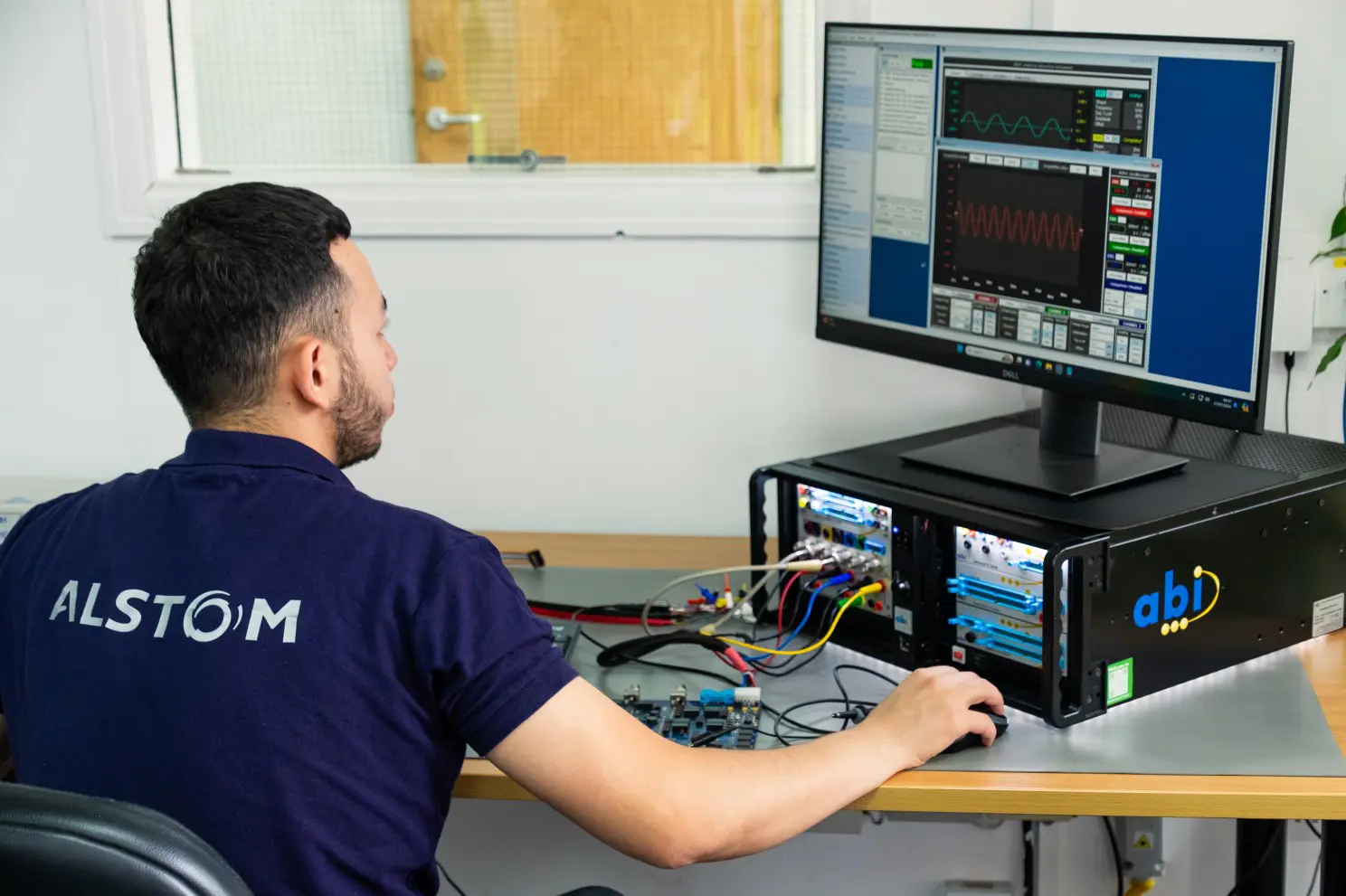
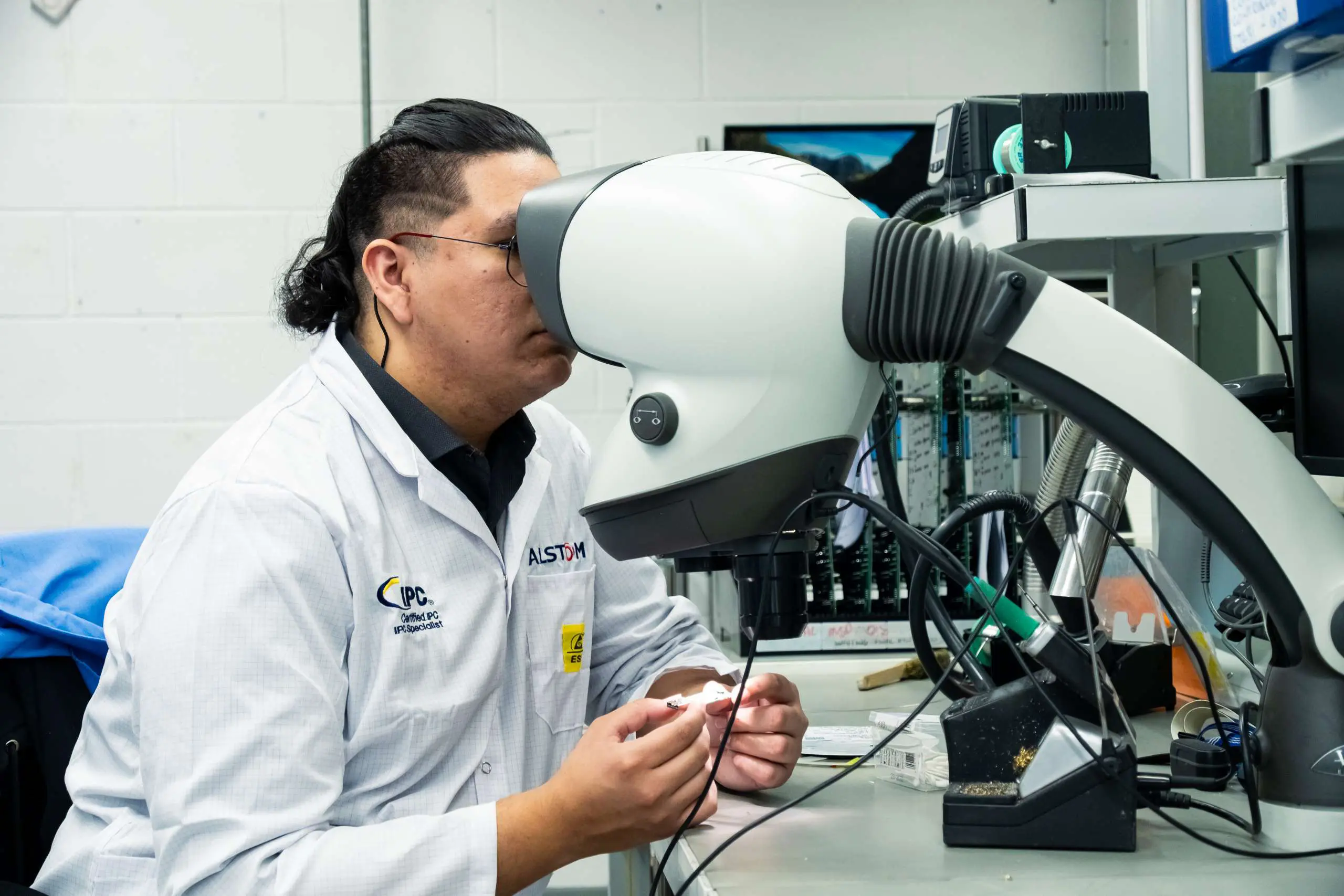
The experience with Alstom is equally interesting. What began with an investment in specialist PCB diagnostics for Metro Santiago expanded across multiple Alstom facilities. At one operation, repair turnaround fell from approximately 100 days to less than 30, while more than 100 technical components were being repaired and tested every month.
Since 2016, Alstom has deployed ABI's BoardMaster across 17 international sites to reduce scrappage of rail electronics
Savings are only one part of the return, as every repair completed internally means knowledge remains with the railway. Every successful diagnostic procedure can be documented. Every recurring failure can become part of a reliability programme. Every recovered board reduces pressure on the spare pool and supply chain.
We Also Need to Rethink What a Repair Facility Looks Like
A modern electronics repair capability should be connected directly to asset management. When a board arrives, engineers should be able to diagnose it down to the component level, compare it against known-good data, identify the root cause, repair it, validate the result and capture what they learned.
With systems such as ABI’s BoardMaster, those measurements can be developed into structured TestFlows containing instructions, test parameters, results, photographs, documentation and reporting. RevEng can then support equipment where schematics and technical information have disappeared. That knowledge should survive the engineer who created it. The experienced technician develops the procedure. The next technician follows it; new employees learn from it. Other workshops can adopt it, and the organisation gradually creates its own electronic maintenance knowledge base.
In rail, electronics repairs carried out to the correct standard save an average of around 90% compared with replacement
This is particularly important as the rail sector faces an engineering skills gap. Repair capability develops people as well as assets. Alstom’s approach, for example, includes structured training and certification alongside the technology.
The Next Step is Electronic Degradation
There is another opportunity that I believe rail has only started to explore. We already understand predictive maintenance extremely well in mechanical systems. We monitor bearings, wheels, vibration, temperature and countless other parameters because we know assets degrade before they fail. Electronic components degrade too. Capacitors age, resistance changes, and semiconductor behaviour can drift. Thermal cycles take their toll and connectors deteriorate. Yet much of railway electronics maintenance remains binary: the module passes or it fails.
If diagnostic data is captured consistently throughout the life of an asset, engineers can begin comparing today’s electronic behaviour against historical reference information. Changes can be investigated before they become service-affecting failures. That opens the door to bringing electronic degradation into predictive maintenance and obsolescence planning, something ABI is already developing with customers through component-level diagnostics, reference data and performance analysis.
Typical device degradation data identified with ABI's BoardMaster on in-use electronics that lead to intermitent faults and breakdowns
Start before the problem becomes critical
A recent discussion with a metro and tram operator illustrated the issue perfectly. Their equipment has moved beyond warranty, failed electronics are being sent externally with repair turnaround measured in months, and management is now looking at establishing an internal PCB repair facility. Their approach makes sense: start with one fleet, select suitable high-value and recurring failures, train the engineers properly, measure the results and then expand the capability into signalling, platform systems, power, communications and the wider network. That is the model I believe more rail organisations should now be considering.
Which electronic assets are currently leaving your organisation for repair? How long are they away? What does that force you to hold in spares? What technical knowledge comes back with them? And what happens when the supplier eventually says the board is obsolete or no longer repairable Those are questions worth answering while the equipment is still supported. Because once a critical PCB becomes unavailable, unsupported and undocumented, the cost of having done nothing becomes very clear indeed.